


 by
by Is Lane Splitting Legal in Michigan? What Every Rider Should Know
By Steinberg Goodman Law PLLC — Personal Injury Lawyers Serving Oakland, Wayne, Macomb, and Washtenaw Counties
If you ride a motorcycle in Michigan, you’ve probably found yourself stuck in heavy traffic, watching open space between cars and wondering — can I ride through? It’s a common question, especially among newer riders who’ve seen lane splitting allowed in other states.
However, in Michigan, lane splitting is not legal. And when a crash happens, this one detail can affect how insurance companies and police treat your claim.
At Steinberg Goodman Law PLLC, we know how quickly a motorcycle ride can turn into a life-changing event. We help injured riders understand their rights, deal with insurers, and recover the full compensation they deserve.
We Tip the Scales and Fight for Every Dollar You Deserve.
Michigan’s Law on Lane Splitting
Michigan traffic law is clear: motorcyclists must use a full lane of traffic and riders are not permitted to drive between rows of stopped or moving vehicles — the act known as lane splitting.
However, the law does allow two motorcyclists to ride side by side in the same lane if both agree. That’s called lane sharing, and it’s perfectly legal.
If you’re injured while lane splitting, insurance companies may try to blame you for the crash. Don’t assume you have no case — liability in motorcycle accidents is rarely black and white. A skilled Michigan motorcycle accident lawyer can help you understand where fault really lies.
Lane Splitting Remains Illegal in Michigan
While some states are reconsidering their motorcycle laws, the fact remains that lane splitting is against Michigan law. If a police officer determines that a rider was lane splitting at the time of an accident, they may issue a citation right at the scene.
Traffic violations can also impact your insurance claim. Insurers routinely consider citations when determining fault, and courts are often unsympathetic when injuries result from actions that violate state law.
Understanding Michigan’s motorcycle laws before an accident happens can help you protect both your safety and your rights on the road.
Lane Splitting, Lane Filtering, and Lane Sharing: What’s the Difference?
These terms sound similar but have very different meanings under Michigan law:
- Lane splitting means riding between lanes of stopped or moving traffic. This is illegal in Michigan.
- Lane filtering involves frequent lane changes when traffic slows or stops. While not expressly prohibited, it’s not advisable, since most drivers in heavy traffic follow closely and may not expect a motorcycle weaving between lanes.
- Lane sharing refers to two motorcyclists riding side by side in a single lane. This practice is legal in Michigan when both riders consent.
Knowing these distinctions helps riders stay safe — and helps prevent legal and insurance complications after a crash.
Why Lane Splitting Is So Dangerous
There’s a clear reason why Michigan law prohibits lane splitting: it’s dangerous for everyone on the road.
Motorcyclists are already more exposed and less protected than drivers of enclosed vehicles. When lane splitting, riders travel in extremely tight spaces, often just inches from moving cars and trucks. Even a small mistake or unexpected move can cause a serious collision.
Drivers in slow or stopped traffic don’t expect motorcycles to pass between lanes. They may drift, pull out, or change lanes suddenly — leaving the motorcyclist nowhere to go.
Lane splitting also endangers pedestrians, bicyclists, and other motorists, since limited visibility and close proximity make it much harder for anyone to react in time.
At Steinberg Goodman Law PLLC, we’ve seen how devastating motorcycle crashes can be. If you or someone you love was hurt on a Michigan roadway, our team is here to help you understand your rights, protect your claim, and guide you toward recovery.
Can You Recover Compensation After a Lane Splitting Accident?
Even if you were lane splitting when the crash occurred, you may still have legal options. Michigan follows a comparative fault rule, which means you can seek compensation as long as you were not more than 50% at fault for the accident.
Depending on your case, you may be eligible to recover for:
- Medical expenses and rehabilitation
- Lost wages and reduced earning capacity
- Pain and suffering
- Damage to your motorcycle and personal property
At Steinberg Goodman Law PLLC, our attorneys carefully analyze every detail — from traffic camera footage and police reports to witness statements — to determine the real cause of your accident. Many motorcycle crashes involve negligent drivers who were texting, tailgating, or changing lanes without checking for bikes.
Why Prompt Medical Care Protects Both Your Health and Your Case
After any motorcycle crash, seek medical care right away, even if your injuries seem minor. Some conditions — like concussions or internal injuries — can develop hours or days later.
Prompt treatment not only protects your health but also strengthens your legal claim. Insurance companies often argue that delays in care mean your injuries aren’t serious or related to the accident. Documented medical evaluations provide powerful evidence to support your case.
What To Do After a Motorcycle Accident in Michigan
If you’ve been in a crash — whether lane splitting was involved or not — follow these steps to protect yourself and your rights:
- Move to safety and call 911 immediately.
- Exchange information with all involved drivers and take photos of the scene.
- Seek medical care right away, even for minor pain or dizziness.
- Avoid admitting fault to police or insurance adjusters.
- Call a Michigan personal injury lawyer before speaking to an insurance representative.
The right legal guidance can make all the difference in how your claim is handled — and in how much you recover.
How Steinberg Goodman Law PLLC Helps Michigan Riders
At Steinberg Goodman Law PLLC, we’re proud to serve injured riders across Oakland, Wayne, Macomb, and Washtenaw Counties. We understand the risks motorcyclists face and the unfair assumptions they often encounter after a crash.
Our attorneys take an active, personal approach — investigating every detail, pushing back against lowball insurance offers, and making sure our clients receive the care and compensation they deserve.
Call (248) 538-1494 or visit www.steinberg-goodmanlaw.com for a free, no-pressure consultation today.
You don’t have to face the aftermath of a crash alone. Let our team help you protect your rights, rebuild your life, and move forward with confidence.
Steinberg Goodman Law PLLC — We Tip the Scales and Fight for Every Dollar You Deserve.
 by
by Nursing Home Abuse in Michigan: Know Your Rights and Legal Options
Worried About a Loved One in a Michigan Nursing Home?
If you suspect your loved one is being abused or neglected in a nursing home, you are not alone—and your concerns are valid.
Families across Michigan—from Oakland, Wayne, and Macomb Counties and beyond—often face difficult questions when a parent, grandparent, or relative shows signs of mistreatment in long-term care.
- Is this normal aging, or is something wrong?
- Can I report the facility?
- Can I sue for nursing home abuse in Michigan?
At Steinberg Goodman Law PLLC, we understand how upsetting and overwhelming this situation can be. We’re here to guide you through your legal options with compassion and clarity. With decades of experience in personal injury law, our Michigan nursing home abuse lawyers will fight for your family’s safety and justice.
What Are Michigan’s Legal Protections Against Nursing Home Abuse?
Michigan law protects nursing home residents under both state and federal rules. Facilities are legally required to provide proper care, prevent abuse or neglect, and respect every resident’s dignity.
Under Michigan law and federal rules, residents have the right to:
- Be free from physical, emotional, and sexual abuse
- Receive proper medical care and hygiene support
- Be protected from financial exploitation
- Report concerns without fear of retaliation
If these rights are violated, the nursing home can be held legally responsible. That includes both the facility and potentially individual caregivers or administrators.
Can I Sue After Nursing Home Abuse in Michigan?
Yes. You may be able to file a lawsuit if your loved one was injured, abused, neglected, or died because of the nursing home’s actions or inaction.
To sue for nursing home abuse in Michigan, the following may apply:
- The resident suffered physical harm, emotional trauma, or death
- The facility or staff failed to follow the required standard of care
- There is evidence of abuse or neglect (e.g., injuries, records, witness reports)
You may be entitled to compensation for:
- Medical expenses related to the abuse or neglect
- Pain and suffering
- Emotional distress
- Funeral costs in wrongful death cases
- Punitive damages in extreme cases
These claims often fall under medical malpractice or general negligence law, depending on the facts. At Steinberg Goodman Law, we’ll review the details and help you understand what you may be entitled to under Michigan law.
Why Is Medical Care So Important After Suspected Abuse?
Getting your loved one to a doctor or hospital isn’t just about their health—it also strengthens your legal case.
Here’s why medical documentation matters:
- Doctors can identify signs of abuse that families may miss
- Medical records can confirm patterns of neglect (like malnutrition or bedsores)
- Early treatment can prevent long-term harm
- A paper trail supports your claim and shows the abuse was serious
Don’t wait—if something feels wrong, trust your instincts and seek care right away.
What to Do If You Suspect Nursing Home Abuse in Michigan
If you believe your loved one is being harmed in a care facility, here’s what you should do:
- Document everything. Take photos of injuries or unsafe conditions and keep notes about what happened and when.
- Speak to the nursing home supervisor. Report your concerns, but do not rely on them to “take care of it.”
- Take your loved one to a doctor. Request a full evaluation and ask the provider to note any signs of abuse or neglect.
- File a report. You can report abuse to Michigan’s Department of Licensing and Regulatory Affairs (LARA).
- Contact Steinberg Goodman Law PLLC to get legal help.
You deserve answers. Your loved one deserves justice.
Why Choose Steinberg Goodman Law?
At Steinberg Goodman Law PLLC, we know that bringing a legal claim against a nursing home isn’t easy. That’s why we make it as simple as possible.
Our legal team has helped families throughout Southfield, Detroit, and across Michigan hold negligent nursing homes accountable. When you work with us:
- We listen first. You’ll talk directly with an attorney, not be passed off.
- We act fast. We investigate abuse and gather the proof needed to support your claim.
- You don’t pay unless we win. Our consultations are always free, and you won’t owe us anything unless we recover money for you.
Don’t Wait. Contact Us for a Free Consultation.
If you believe someone you love has been abused or neglected in a Michigan nursing home, let us help.
Call (248) 538-1494 or visit www.steinberg-goodmanlaw.com to schedule a free, no-pressure consultation. We’re here to protect your family, seek the justice you deserve, and hold negligent facilities accountable.
You don’t have to go through this alone. We Tip the Scales and Fight for Every Dollar You Deserve.
 by
by Nitrous Oxide and the Dangers of Recreational Use
Understanding the Risks and Your Rights Under Michigan Law
At Steinberg Goodman Law PLLC, we know that people of all ages often experiment with substances like nitrous oxide, sometimes called “laughing gas” or “whippets,” without realizing how dangerous it can be. Recreational inhalation of nitrous oxide for the purpose of causing intoxication, euphoria, or dulling the senses is rising across Michigan.
If you or someone you love has suffered neurological, psychological, cardiovascular, or hematologic injuries from nitrous oxide misuse, you may have questions about your legal rights. Our personal injury law firm is here to provide answers.
What Michigan Law Says About Nitrous Oxide Use
Michigan law regulates the possession, sale, and use of nitrous oxide because of its known risks. While some licensed professionals, like dentists, may use it safely for patients, recreational use can be dangerous and illegal.
In June 2024 a law banning the sale of “objects specifically designed for inhaling nitrous oxide for recreational purposes” took effect. Included are “crackers” and other paraphernalia used to release the nitrous oxide gas from small canisters, which are often referred to as “whippets”.
If your injuries stem from nitrous oxide obtained or used improperly, such as through negligent supervision, unlawful sales, or unsafe environments, you may have legal claims under Michigan’s personal injury laws.
Our Michigan personal injury lawyers can review whether you qualify for compensation to cover medical bills, lost wages, and pain and suffering. Speaking with a Michigan accident attorney as soon as possible ensures your rights are protected.
Why Medical Care Is So Important
Medical experts warn that recreational use of nitrous oxide may lead to devastating permanent injuries and even death:
- Neurological damage (numbness, tingling, paralysis, memory problems, brain damage)
- Psychological effects (confusion, mood disorders, depression)
- Cardiovascular strain (irregular heartbeat, increased blood pressure, risk of heart attack)
- Hematologic injuries (dangerous anemia caused by vitamin B12 depletion)
Seeing a doctor right away is essential, not only for your health, but also to document your condition. Medical records provide critical evidence that supports your legal claim.
What to Do After a Nitrous Oxide Injury in Michigan
If you or a loved one has been harmed by recreational nitrous oxide use:
- Get medical attention immediately. Your health is the primary concern.
- Document your symptoms and care with notes and photos.
- Save evidence (such as canisters, packaging, and receipts).
- Contact a Michigan personal injury lawyer for a free case evaluation.
Why Choose Steinberg Goodman Law?
At Steinberg Goodman Law PLLC, we are more than just a Michigan personal injury law firm. We are trusted advocates serving clients across Oakland, Wayne, Macomb, and Washtenaw Counties.
Choosing the right Michigan accident lawyer near you can make all the difference. We combine decades of experience with a client-first approach:
- We know Michigan law inside and out.
- We offer free consultations with no pressure.
- We don’t get paid unless we win your case.
We Tip the Scales and Fight for Every Dollar You Deserve.
Call Today for a Free Consultation
If you or a loved one has suffered an injury due to recreational nitrous oxide use, don’t face the legal system alone. Speak with an experienced Michigan injury lawyer who will stand by your side.
Call (248) 538-1494 or visit www.steinberg-goodmanlaw.com to schedule your free consultation today.
Your health and your future matter. Our team is here to fight for both.
 by
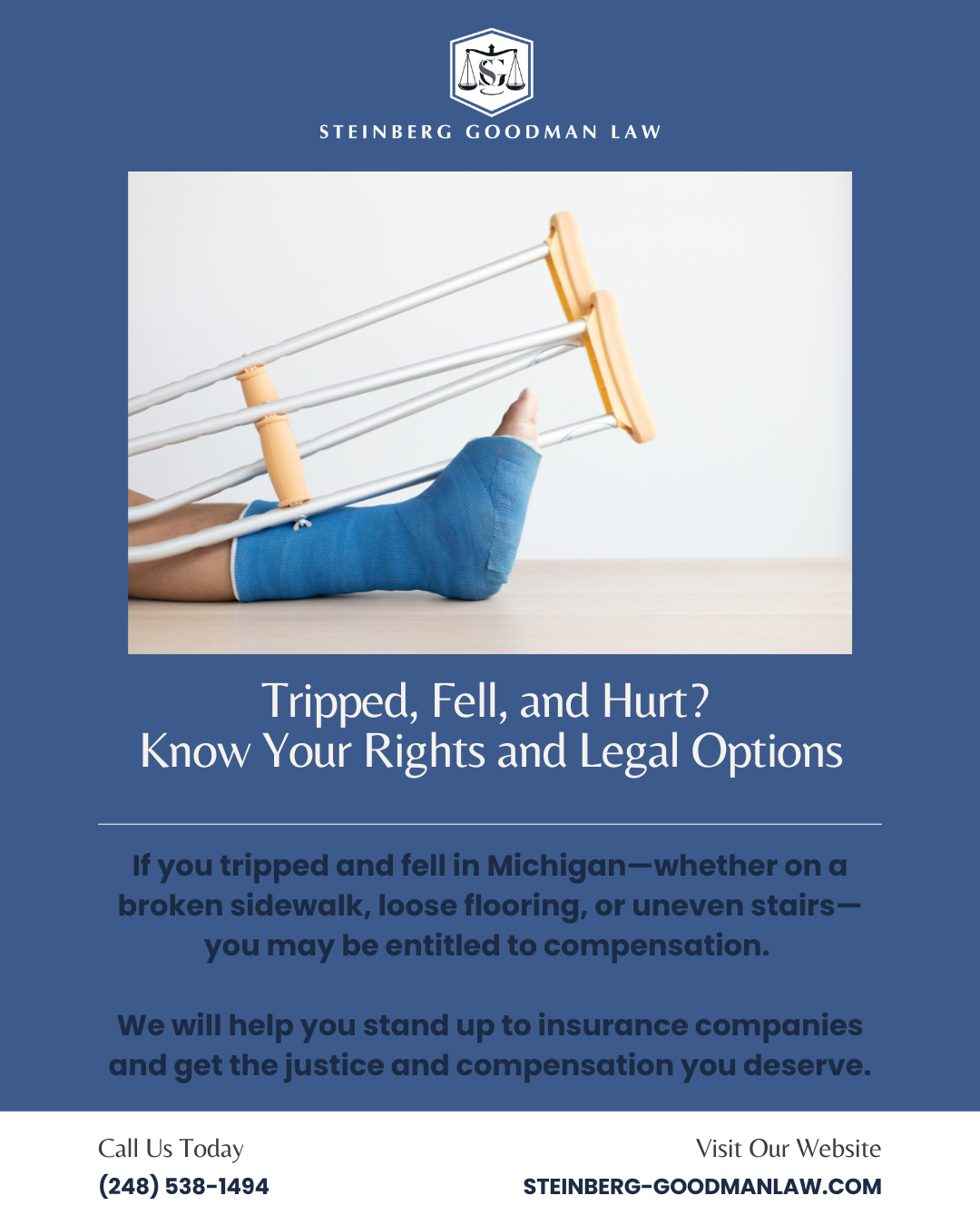
by Tripped, Fell and Hurt in Michigan? You May Have Legal Options. Here’s What to Know.
By Steinberg Goodman Law PLLC — Michigan Personal Injury Lawyers Serving Oakland, Wayne, Macomb, and Washtenaw Counties
You’re Not Alone — And You May Have a Case
If you tripped and fell in Michigan—whether on a broken sidewalk, loose flooring, or uneven stairs—you might be wondering what comes next.
Do you have to pay your own medical bills?
Can you sue after a trip and fall in Michigan?
Will anyone take your injuries seriously?
At Steinberg Goodman Law PLLC, we understand how confusing and frustrating these accidents can be. A simple fall can lead to serious injuries—especially for older adults or those with pre-existing conditions. You may be in pain, missing work, or dealing with medical bills that just keep growing.
You don’t have to handle this alone. We’re here to explain your rights under Michigan law and help you figure out if you’re entitled to compensation. For more than 25 years, we’ve helped people across Wayne, Oakland, Macomb, and Washtenaw Counties stand up to property owners, businesses, and insurance companies.
We Tip the Scales and Fight for Every Dollar You Deserve.
What Are Your Legal Rights After a Trip and Fall in Michigan?
In Michigan, property owners have a duty to keep their property reasonably safe. This includes:
- Fixing broken sidewalks, flooring, or steps
- Cleaning up spills or loose objects
- Marking dangerous areas with signs or barriers
- Providing adequate lighting in walkways and stairwells
Under Michigan premises liability law, if you were hurt because of a property owners’ negligence, you may be entitled to compensation.
That’s why talking to a skilled Michigan trip and fall lawyer is so important. The attorneys at Steinberg Goodman Law PLLC know how to examine the facts and build strong cases, even when insurance companies try to blame the victim.
Can I Sue After a Trip and Fall in Michigan?
Yes, if certain conditions are met.
Common trip-and-fall hazards that may lead to valid claims in Michigan include:
- Broken or uneven sidewalks
- Torn carpets or unmarked steps in stores or offices
- Loose handrails, cluttered walkways, or poor lighting in apartment complexes
- Unsafe conditions at schools, churches, or public buildings
If your injuries required medical treatment, time off work, or caused lasting pain, you may be able to recover compensation for:
- Medical bills
- Lost wages
- Pain and suffering
- Out-of-pocket expenses
- Future treatment costs
Why Is It So Important to See a Doctor?
Even if your injury seems minor, it’s crucial to get medical care right away. Why?
- Some injuries get worse over time — like head injuries, back pain, or ligament tears.
- Medical records create evidence — and help show the insurance company your injury is real.
- Delayed treatment can hurt your case — if you wait too long, they may claim you weren’t really hurt.
The sooner you get checked out and follow up with care, the better.
What Should I Do After a Trip and Fall in Michigan?
Here’s a simple list of what to do if you or a loved one was hurt in a trip-and-fall accident:
WHAT TO DO:
- Report the incident to the property owner or manager right away
- Take pictures of where you fell and what caused it
- Get medical attention, even for minor injuries
- Write down what happened while it’s still fresh
- Save your shoes and clothing — they may be evidence
- Don’t give a recorded statement to an insurance adjuster without a lawyer
- Call Steinberg Goodman Law PLLC to review your options
Talk to an Experienced Michigan Trip and Fall Lawyer at Steinberg Goodman Law PLLC Today for a Free Consultation
If you’ve been injured in a trip and fall accident anywhere in Michigan—whether in Southfield, Detroit, Royal Oak, Novi, Livonia, Ann Arbor, or beyond—you don’t have to figure this out on your own.
At Steinberg Goodman Law PLLC, we’ve helped clients just like you get the justice and compensation they deserve. There’s no fee unless we win your case, and your first consultation is always free and pressure-free.
Let us handle the legal stress so you can focus on healing.
📞 Call (248) 538-1494 or visit www.steinberg-goodmanlaw.com to get started today.
We Tip the Scales and Fight for Every Dollar You Deserve.